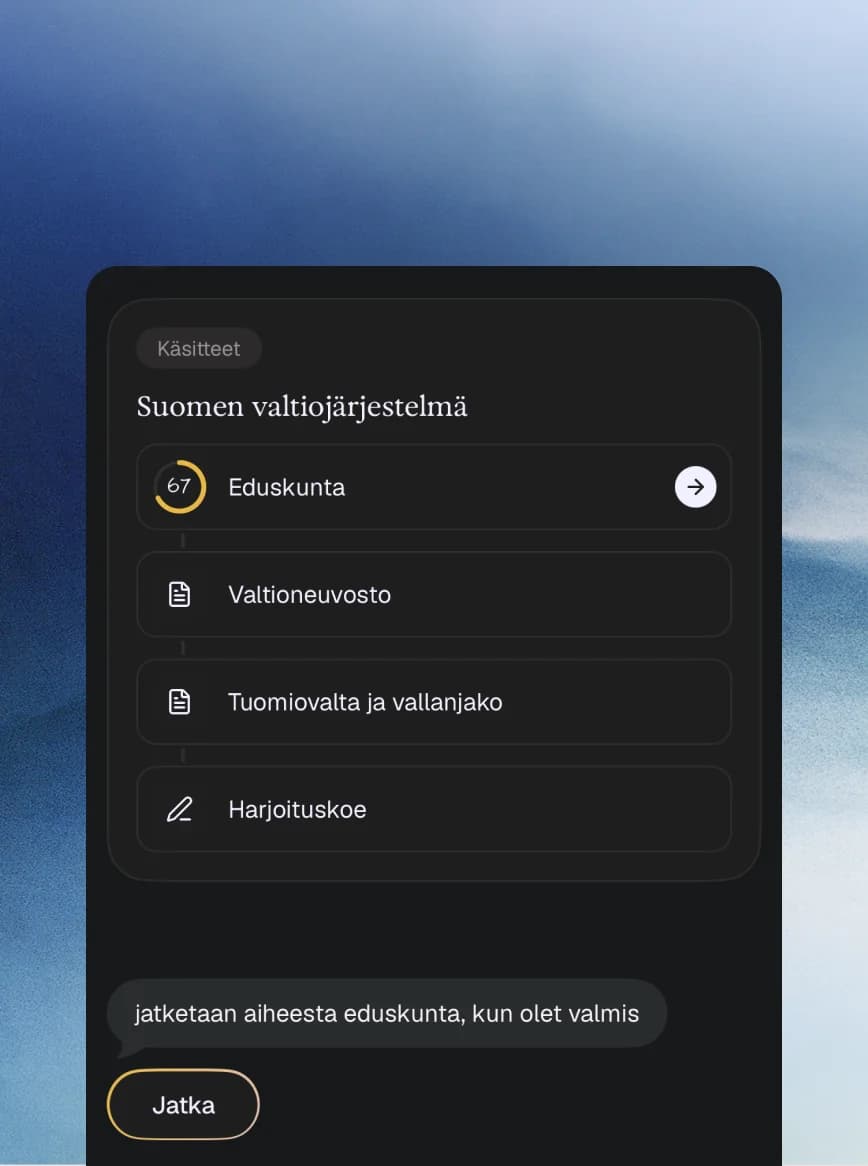
Guided lessons
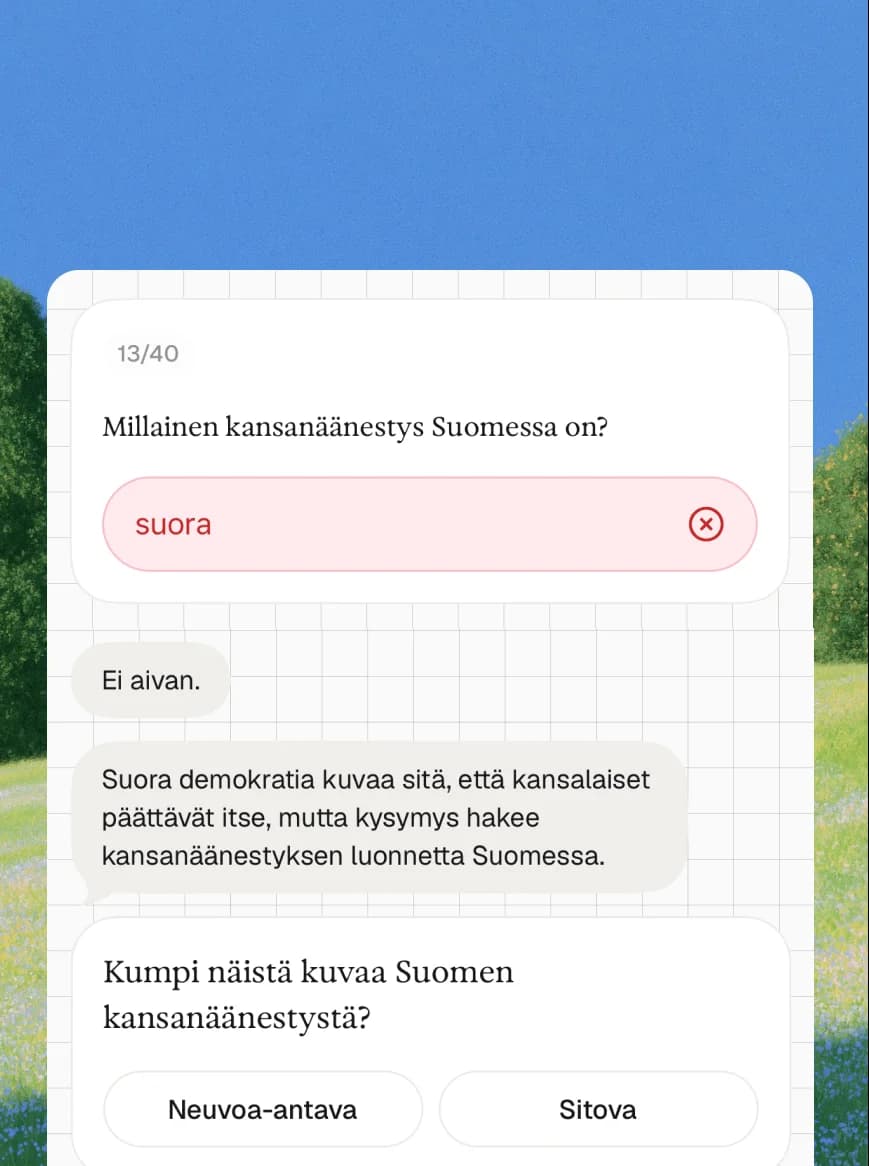
Lexie explains one concept at a time and asks right away what you remember.
Lexie's course has lots of tasks, guided lessons and instant feedback on what you know. The course is in plain Finnish, like the test. Start today.
Each topic goes through one concept at a time and tests what you know right away.
Lexie explains one concept at a time and asks right away what you remember.
When you answer wrong, Lexie tells you why and helps you find the right answer.
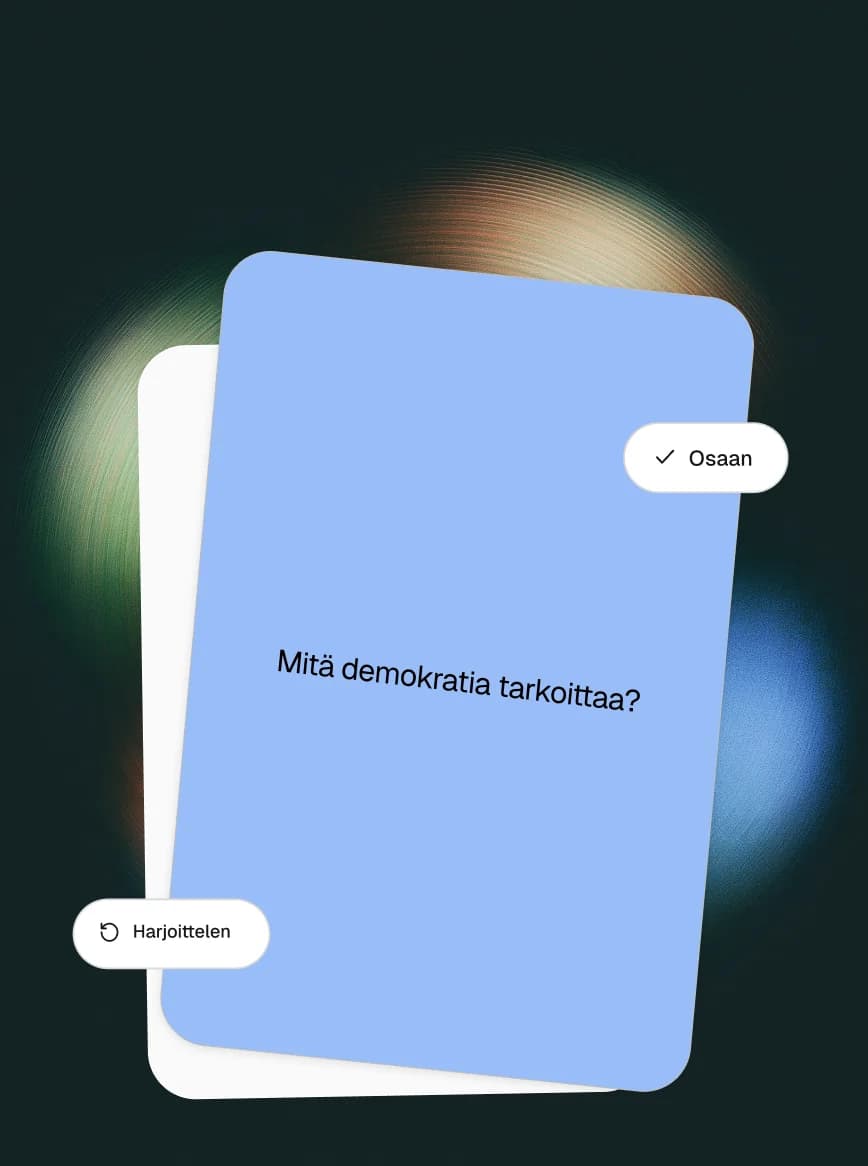
Review difficult words and concepts until they stick.
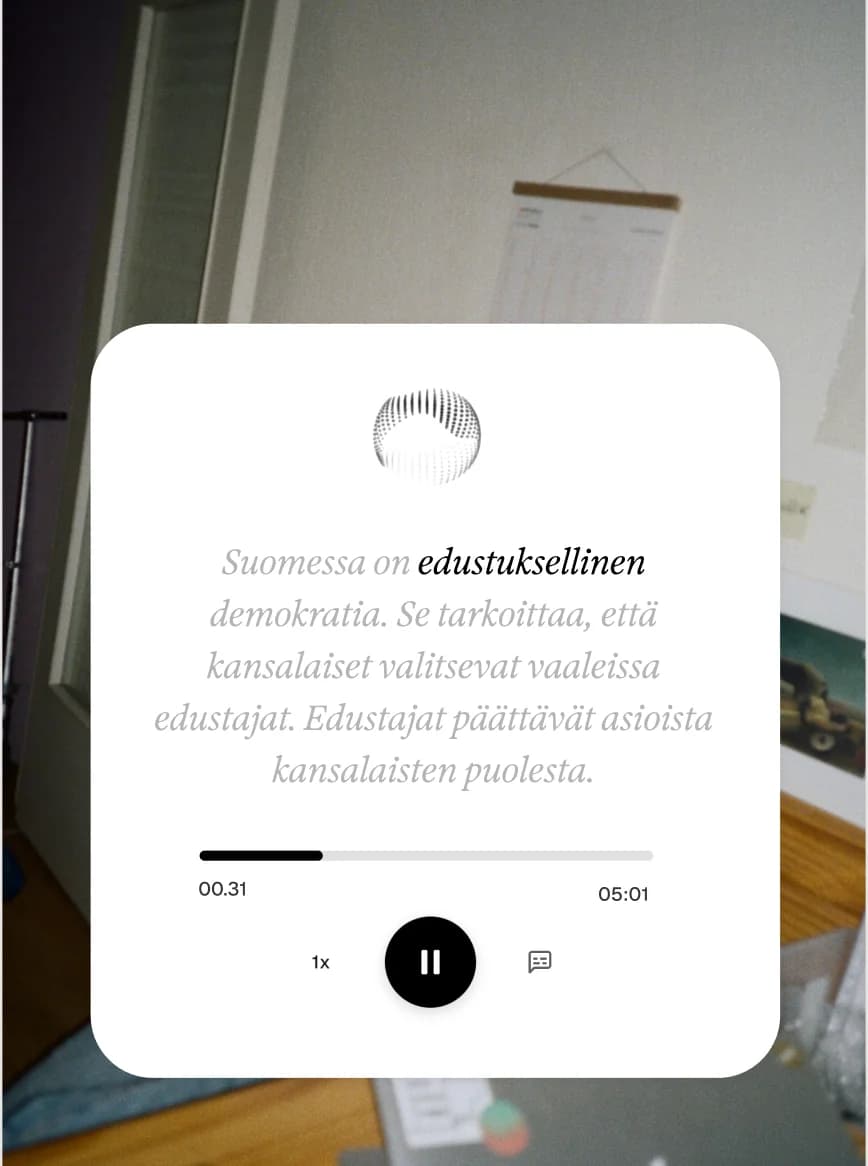
You can also listen to every topic. That helps when you read in a foreign language.
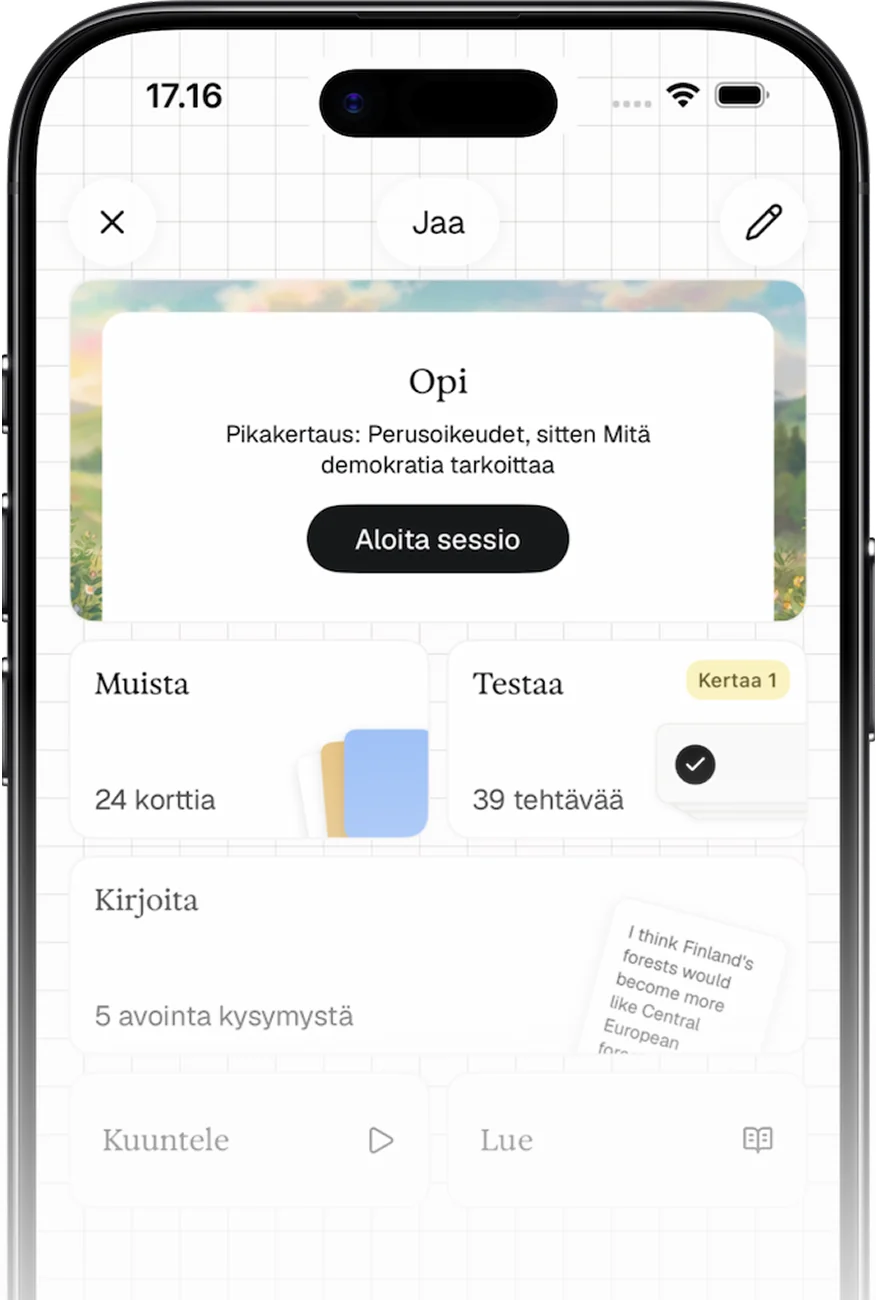
The course has four parts and 24 topics. They cover the topics the Nationality Act lists: key legislation, fundamental and human rights, equality, gender equality and Finnish history. More topics on culture and everyday life come during the autumn. The topic names and lessons are in Finnish.
How the test works under the law and the draft decree.
Many people do not. Check this first.
You do not need the test if you are under 18 or 65 or older. You also do not need it if you have completed the Finnish matriculation examination or a higher education degree in Finland, in Finnish or Swedish.
You can also be exempted if your health or a disability stops you from taking the test. Then you need a report of a significant, long-term medical reason.
Language skills are a separate requirement. You still show your language skills separately, for example with the YKI test. The citizenship test does not replace it.
One subscription gives you every Lexie course.
Try Lexie free with 3 study sets.
59,99 € billed yearly
Pay here, and they unlock everything in the app with a code. No card needed on their device.
One purchase unlocks Lexie on the web and in the app.
Section 25 a of the Nationality Act lists the topics: key Finnish legislation, fundamental and human rights, equality, gender equality, and Finnish history and culture. The test also asks about other key facts in the study material.
A working group at the Ministry of the Interior described the topics in more detail. The test can ask, for example, about democracy, the rule of law and the roles of authorities, women's rights, the protection of minorities, Finnish independence and wars, everyday life such as housing, health care and work, and public holidays and why Finns celebrate them.
The law also says that the test does not ask about small details. The right answers must be in the study material.
The University of Helsinki writes the study material and the questions for the Finnish Immigration Service. The material is public and free. It builds on the civic orientation study material, which you can already read at yhteiskuntaorientaatio.fi.
The material is not published yet. That is why this course is built from the law's topic list, the working group's topic areas and the civic orientation material. When the official material comes out, we update the course to match it.
The course topics come from chapter 3 a and section 25 a of the Nationality Act, government proposal HE 54/2026, the Ministry of the Interior working group report and the civic orientation study material that the official test material builds on. The course is written at level B1, in the same language as the test. The practice uses the two methods with the most evidence: you recall things yourself instead of rereading the text, and you come back to the same thing on different days.