
Practise the maths
your test will ask.
Send a photo of your exercises, a PDF, or just say what your test covers. Lexie sorts it into the kinds of problem the topic asks and builds a ladder for each one.
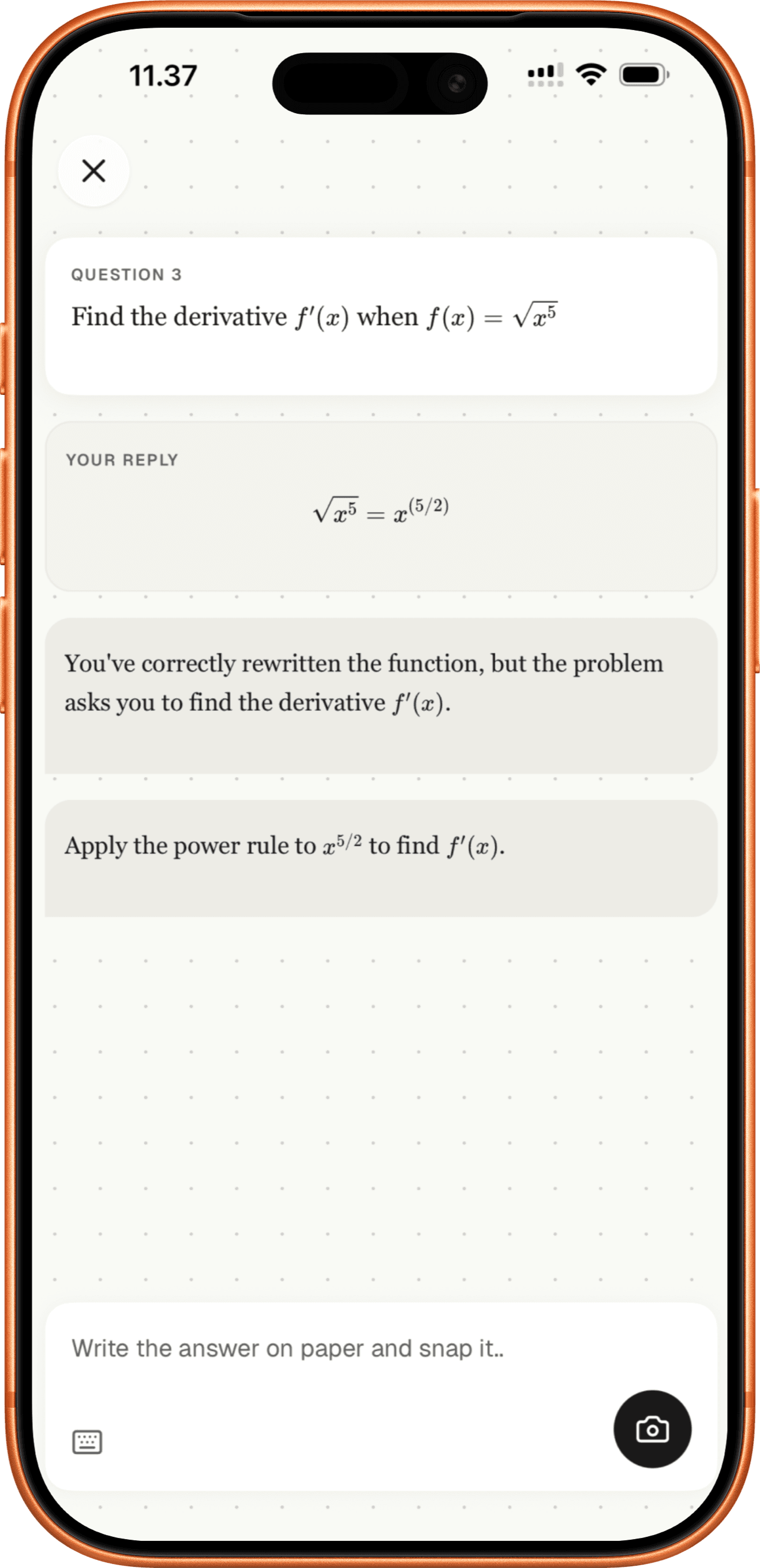
“Thanks a million 😍 i practised with this app and I got a 10- 😭 (in general, I got a 7)”
AdelinaApp Store
How math mode works
Upper secondary works on the worksheet. Grades 1 to 9 get quick drill practice instead.
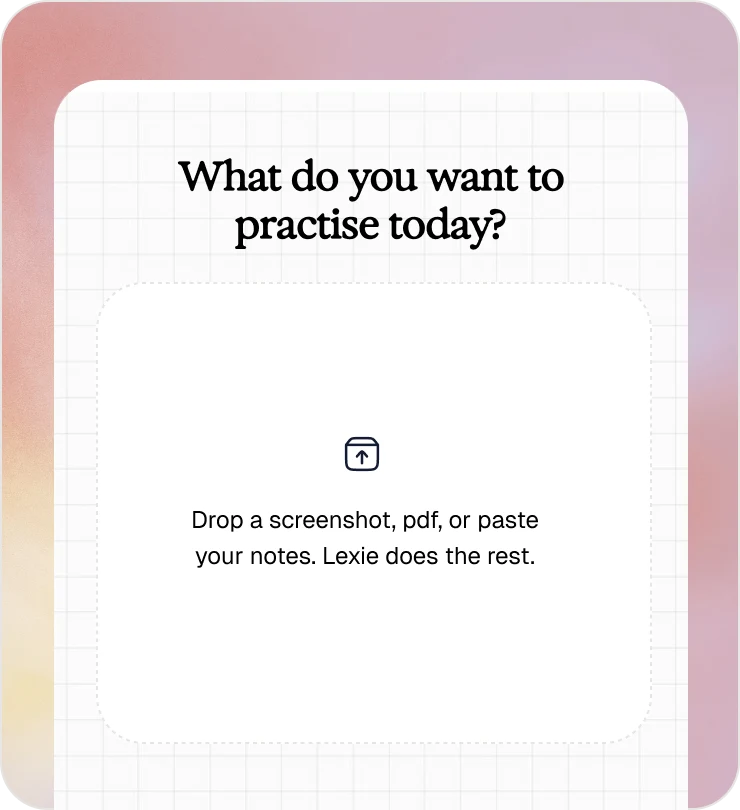
Send a photo of your exercises, drop the PDF, or just say what the test covers.

Lexie names the kinds of problem it found, then asks how much of the topic you want. Each kind gets a ladder: easy, then medium, then exam level.
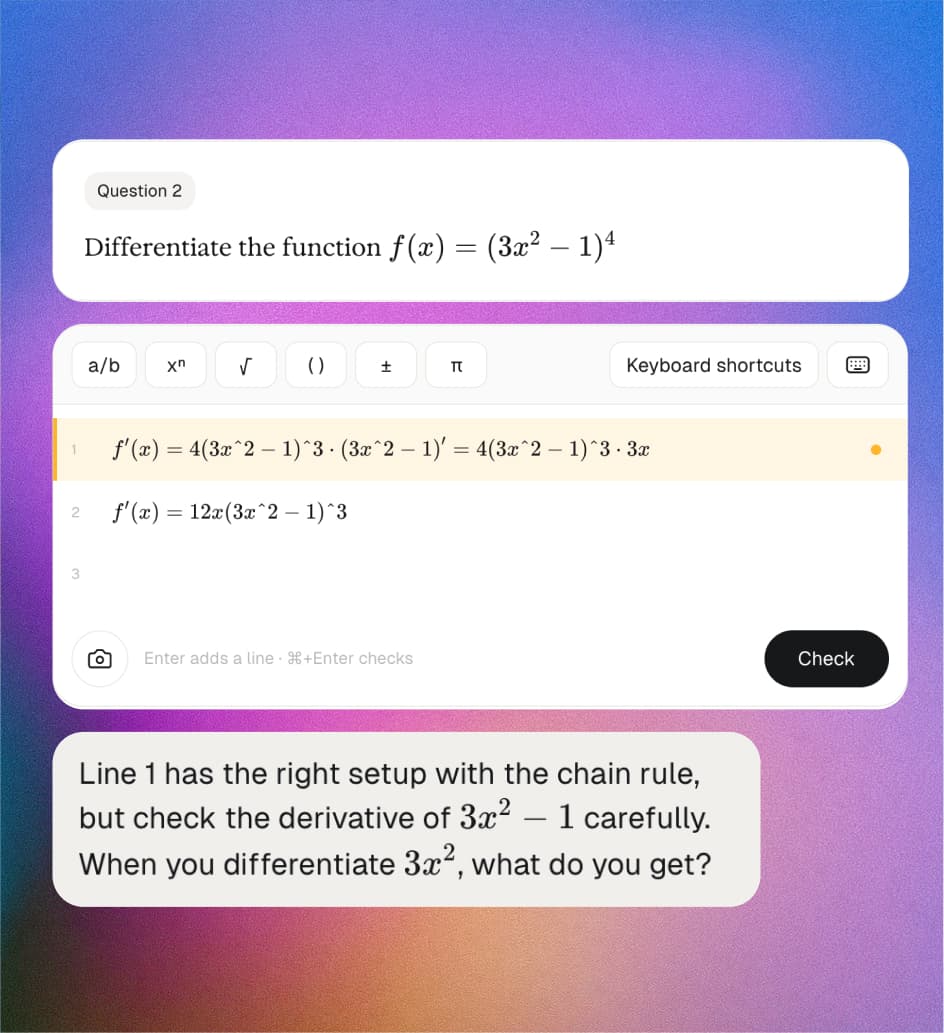
Write the solution line by line and press Check. Lexie reads every line and marks the first one that slips.
What makes it different
Your material, not a syllabus
Other apps teach their own course in their own order. Lexie reads the worksheet your class set this week.
A ladder per kind
Every kind starts easy and ends at exam level, so you meet it three times, harder each time.
It reads your working
A solver shows you its own method. Lexie reads your lines, ticks the good ones and marks the first one that goes wrong.
Answer keys a computer checked
Every answer is verified by a computer algebra system before you ever see the problem.
Frequently asked questions
Send a photo of your exercises, a PDF, or just say what your test covers. Lexie names the kinds of problem it found and the topic they belong to, then asks how far you want to go: the one problem you sent, the kinds it found, or the whole topic. Each kind gets its own ladder, from easy up to exam level, and your own problems are kept word for word inside it. A set takes about 10 to 25 seconds.
Every line. You write your solution one line at a time and press Check, half way or at the end. Lexie ticks the lines that hold, marks the first one that goes wrong and points at the slip without handing you the answer. Exams give the marks for the working, so this is the thing worth practising.
Yes. Solve by hand and drop a photo of your working into the worksheet. Lexie turns your handwriting into lines you can edit before the check, so you fix a misread digit rather than argue with it. On a phone this is the way to work; the typed worksheet is built for a laptop.
Upper secondary material always opens the worksheet, where you write the solution out and Lexie reads it line by line. Grades 1 to 9 get quick drill practice instead, a run of short problems to build speed. It works in English and Finnish today.
No. A solver shows you its own method and the answer. Lexie reads the working you wrote and tells you which line went wrong. Press "I am stuck" and the help grows one step at a time: a nudge, then the rule, then the next line. The full solution comes only after three hints or three checks.
You don't learn maths by watching.
Photograph your worksheet and start on the first kind.