
Practise the exam
before the exam
Your exam will not give you four options. It asks you to explain, analyse and argue, and so does Lexie.
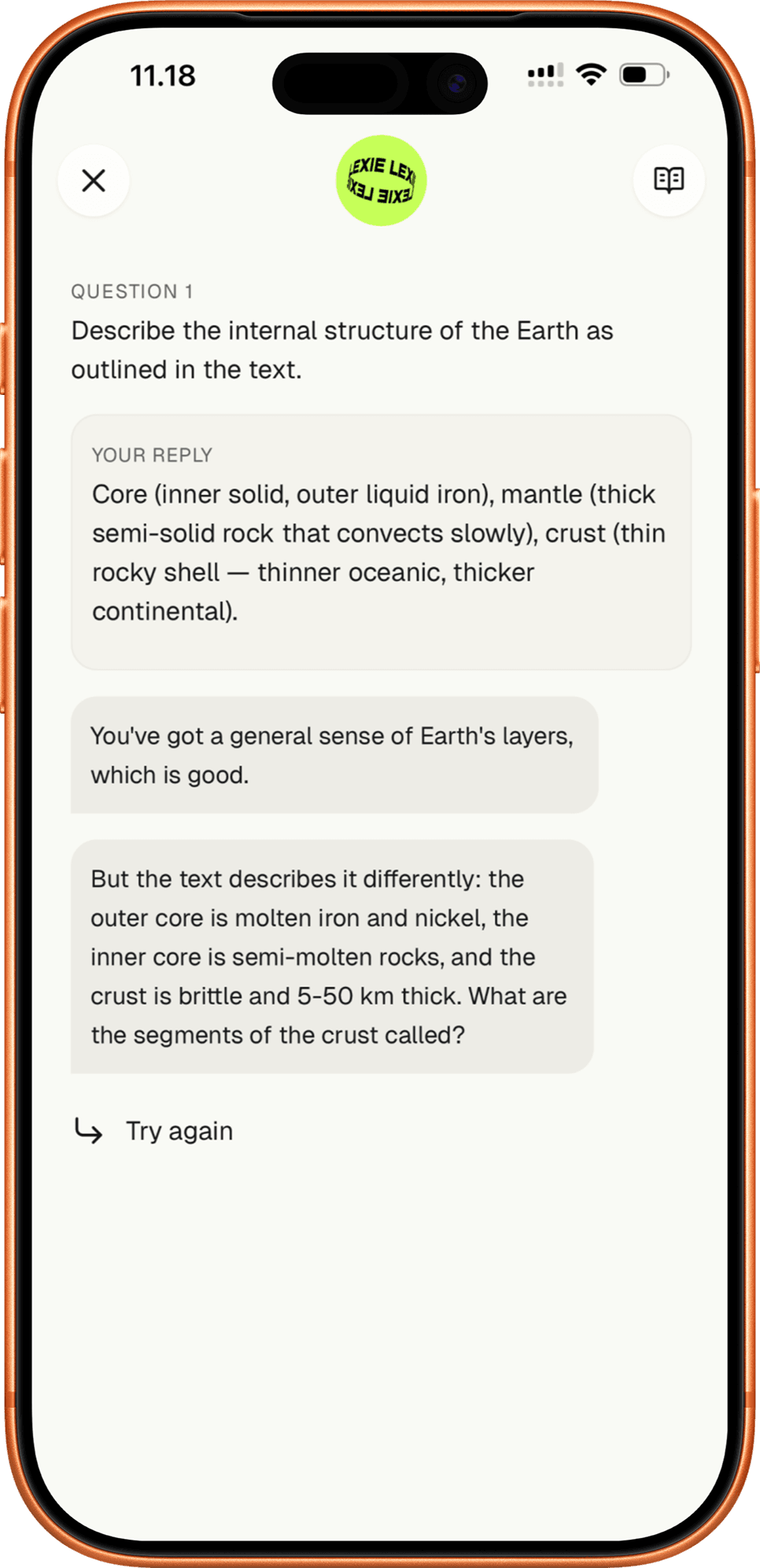
“If you need to revise anything download this app. All you have to do is download, take a photo of your work and it will do its magic and make life easy. You will ace tests with this app”
Georgia CoyleGoogle Play Store review
How practise exams work
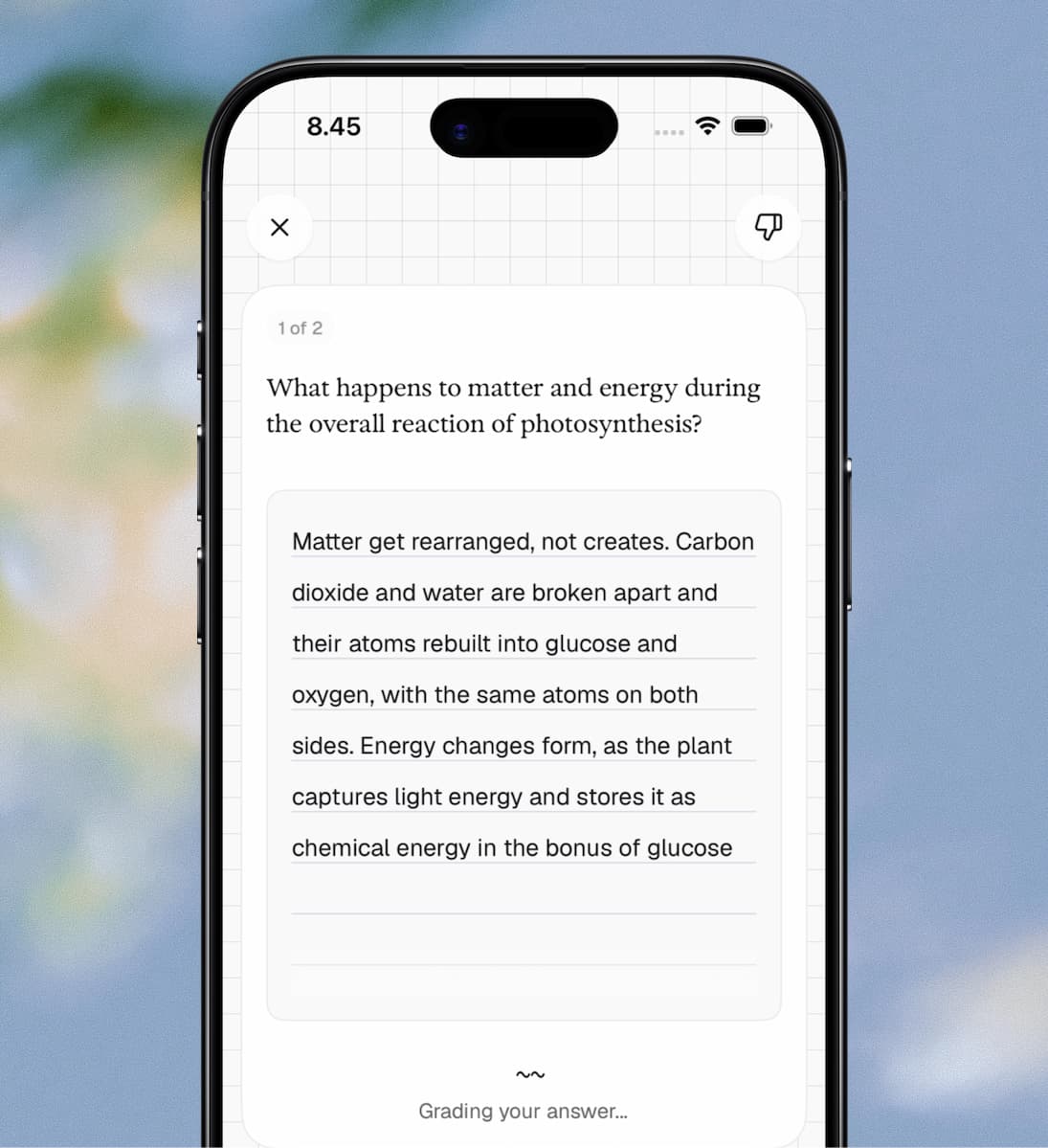
You write the answer in your own words. No options, no word bank, no safety net.
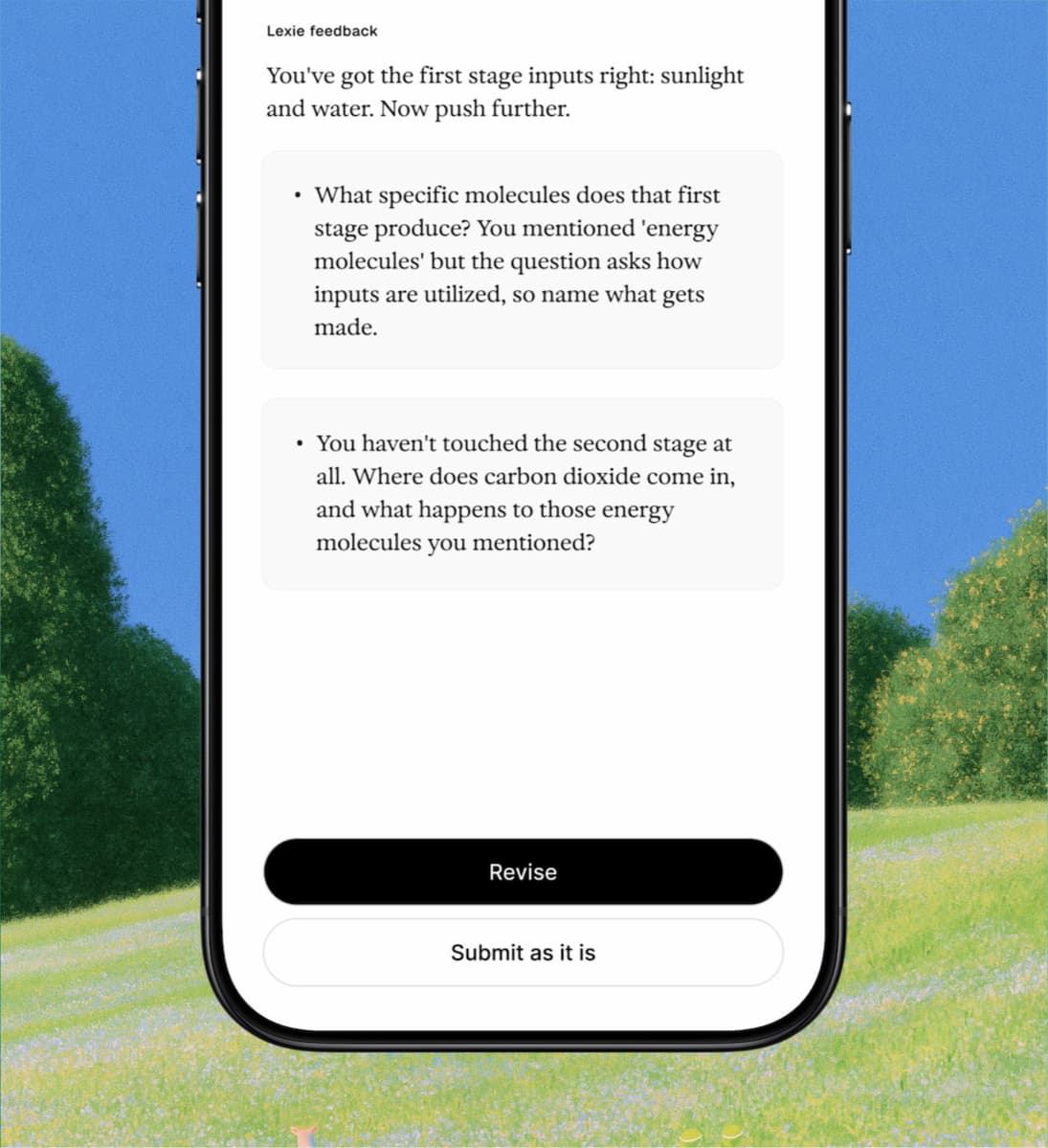
Lexie reads it and names what is missing. Revise the answer, or submit it as it is.
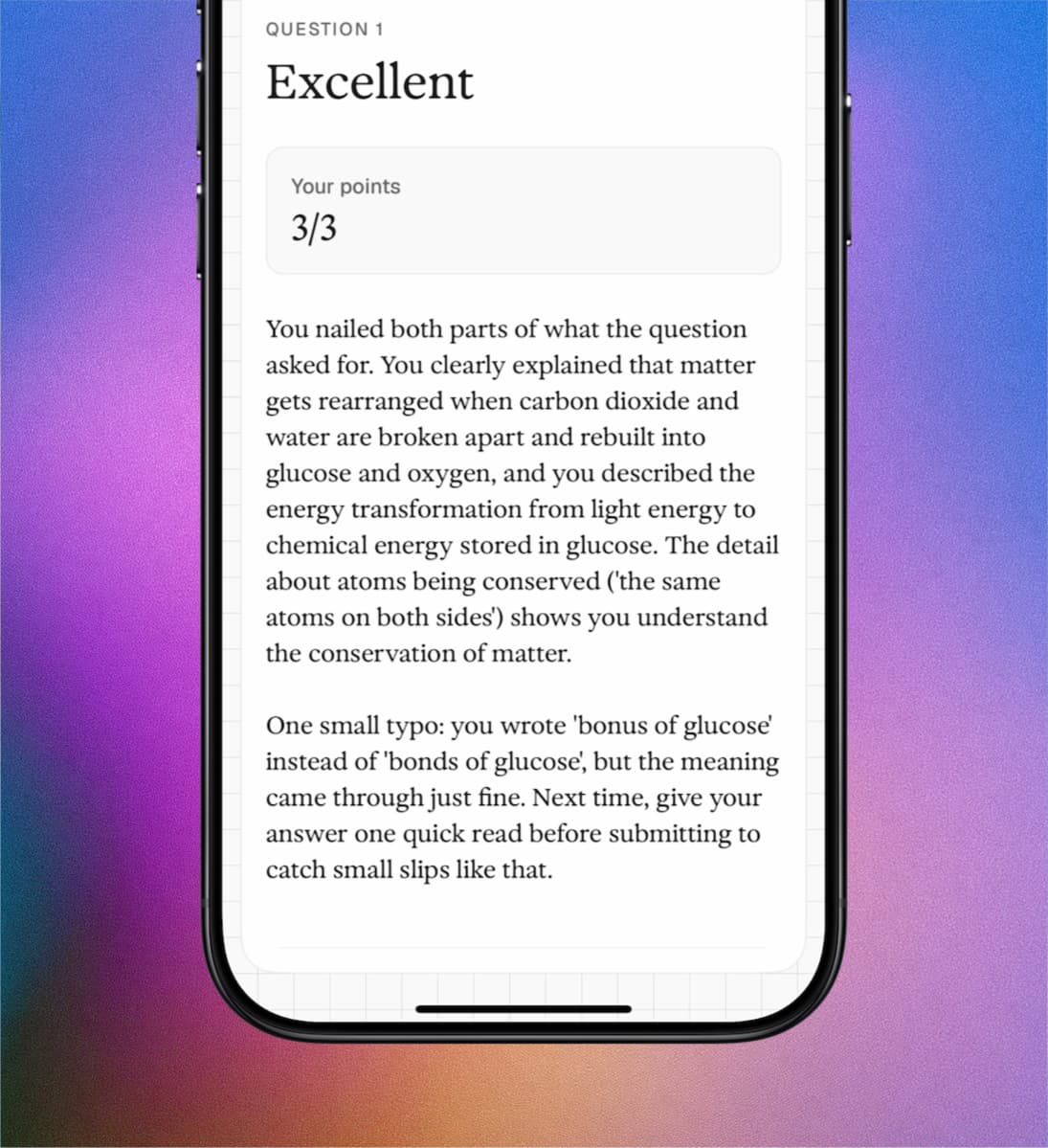
You get points and the reasons behind them, down to the one word you slipped on.
Works across subjects
Biology
Explain how the countercurrent multiplier mechanism in the loop of Henle enables the kidney to produce concentrated urine.
History
Evaluate the extent to which the Treaty of Versailles was responsible for the rise of National Socialism in Germany.
Psychology
Discuss the strengths and limitations of Milgram's obedience study, including ethical considerations and ecological validity.
Law
Analyse the doctrine of parliamentary sovereignty and explain how EU membership created tension with this principle prior to Brexit.
Why this matters
The blank page problem
Most students have never practised writing an exam answer before the exam itself. They revise by re-reading notes, reviewing flashcards, doing multiple choice questions. Then they sit down, read "Explain the mechanism by which..." and freeze. Lexie gives you that blank page experience before it counts.
Understanding beats memorisation
You can memorise that mitosis has four phases and still fail to explain what happens during each one. Multiple choice can test whether you recognise the right answer. Only open-ended questions can test whether you understand the concept well enough to articulate it. That's the difference between a pass and a high grade.
The testing effect, amplified
Producing a written explanation from memory is the most demanding form of retrieval practice. It requires you to organise your knowledge, identify what is relevant, and construct a coherent response, the same cognitive process your exam demands. Research consistently shows that the harder the retrieval, the stronger the memory.
Frequently asked questions
Practise exams generate open-ended questions from your study material. You write your answer in your own words and Lexie evaluates your response, providing scaffolded feedback on your first attempt and a full model answer after two attempts. It's the closest thing to sitting a real exam with a tutor marking your work.
Lexie assesses your response for conceptual accuracy, completeness, and whether your reasoning is sound. It categorises your answer on a scale from complete understanding to completely lost, then provides targeted feedback specific to what you wrote. The feedback is not a generic hint.
No. Quizzes use structured question types: multiple choice, fill-in-the-blank, matching, typed recall. Practise exams use open-ended questions where you write extended responses. Quizzes test recall and recognition. Practise exams test whether you can explain and articulate your understanding, which is what most real exams require.
Any subject where the exam requires written explanations. Science, history, psychology, law, medicine, philosophy, economics, literature. If your exam asks you to "explain," "evaluate," "discuss," or "analyse," practise exams prepare you for exactly that format.
Yes. Lexie evaluates the depth and accuracy of your response regardless of the level. Medical students, law students, and postgraduate students use practise exams to prepare for written assessments where producing a structured, accurate explanation is the entire exam.
Your exam hands you a blank page.
Practise filling it.