
Human anatomy in 3D: 3,400 named structures, free
Orbit the human body, switch between the skeleton, muscles, organs, nerves and vessels, and search every named structure. Then test yourself: name what is highlighted, or tap what is named.
“This app is so amazing and helps with studying SO SO SO SO much, I wish I could use Lexie for every exam I have so I wouldn't need to stress 24/7”
Shine PemipaGoogle Play Store review
View it. Find it. Test it.
Three ways to use the atlas
Show a system
Start from the skeleton, then add muscles, vessels, nerves and organs one switch at a time. Each system downloads only when you switch it on.
Tap a structure
Tap anything to see its name, the system it belongs to, and the group it is part of. Search finds every named structure, from the femur to the smallest cranial nerve.
Test yourself
Ten questions on the systems you chose. Half highlight a structure and ask for its name. Half name a structure and wait for your tap.
Fifteen systems
Skeleton
Bones form the supporting framework of the body, protect organs, and provide attachment points for muscles. Their internal tissue also stores minerals and produces blood cells.
Muscles
Skeletal muscles generate movement by pulling on their attachments. Together with tendons, they move joints, stabilize posture, and produce heat.
Heart
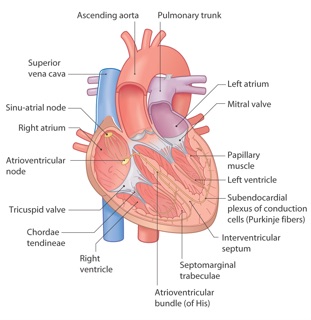
The heart is a muscular pump with four chambers. Its valves direct blood forward through the pulmonary and systemic circuits.
Sensory organs
These structures contribute to special senses, including sight, hearing, and balance. Their specialized tissues detect stimuli and work with the nervous system to convey information.
Arteries
The heart drives blood through the circulation. Arteries carry blood away from the heart to supply tissues or, in the pulmonary circuit, to the lungs.
Veins
Veins return blood toward the heart. Superficial and deep networks collect blood from the tissues; the pulmonary veins bring oxygenated blood back from the lungs.
Nervous system
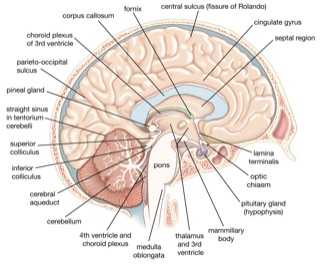
The brain, spinal cord, and peripheral nerves carry and process signals. They support sensation, movement, coordination, and automatic regulation of body functions.
Respiratory
The airways conduct air to the lungs, where oxygen and carbon dioxide move between air and blood. Breathing depends on pressure changes produced by respiratory muscles.
Digestive
The digestive tract breaks down food, absorbs nutrients and water, and moves waste onward. Accessory organs contribute bile and digestive enzymes.
Urinary
The kidneys filter blood and regulate fluid, electrolyte, and acid-base balance. Urine travels through the ureters to the bladder and exits through the urethra.
Lymphatic
Lymphatic vessels return excess tissue fluid to the circulation. Lymph nodes and other lymphoid organs support immune surveillance and responses.
Endocrine
Endocrine organs release hormones into the blood to coordinate processes such as metabolism, growth, stress responses, and reproduction.
Reproductive
The male reproductive structures represented here contribute to sperm production, maturation, transport, and the production of sex hormones.
Body surface
The body surface provides an outer anatomical reference. The integumentary system forms a protective barrier and contributes to sensation and temperature regulation.
Connective tissue
Cartilage, ligaments, and other connective tissues support, connect, and separate structures. Their roles include stabilizing joints and distributing mechanical loads.
Frequently asked questions
Yes. Open it in your browser and start. You do not need an account, and there is nothing to install. The atlas is built on BodyParts3D, an open dataset under a Creative Commons licence.
An adult male reference body with 2,234 modelled structures and 3,432 named concepts, grouped into fifteen systems: skeleton, muscles, heart, arteries, veins, nerves, respiratory, digestive, urinary, lymphatic, endocrine, reproductive, sensory organs, connective tissue and the body surface.
Choose the systems you want to be tested on, then start. Half the questions highlight a structure and ask you to type its name. The other half name a structure and ask you to tap it on the body. After ten questions you see your score, the structures you missed, and a link to keep going.
Yes. Each system downloads only when you switch it on, so the skeleton loads in a few seconds on mobile data. Drag to turn the body, pinch to zoom, and tap a structure to see its name.
Use it to learn and revise. It is a learning reference, not a diagnostic or surgical tool, and it does not contain every human structure or variation.
Now study your own anatomy notes
Drop a lecture, a PDF or a labelled diagram into Lexie. It picks out the structures and turns them into flashcards, a quiz and image occlusion.